



In today’s fast-paced digital world, businesses are constantly competing for attention, engagement, and conversions. Simply having a product or service is no longer enough—your target audience needs to discover, engage, and trust your brand. This is where digital marketing techniques come into play.
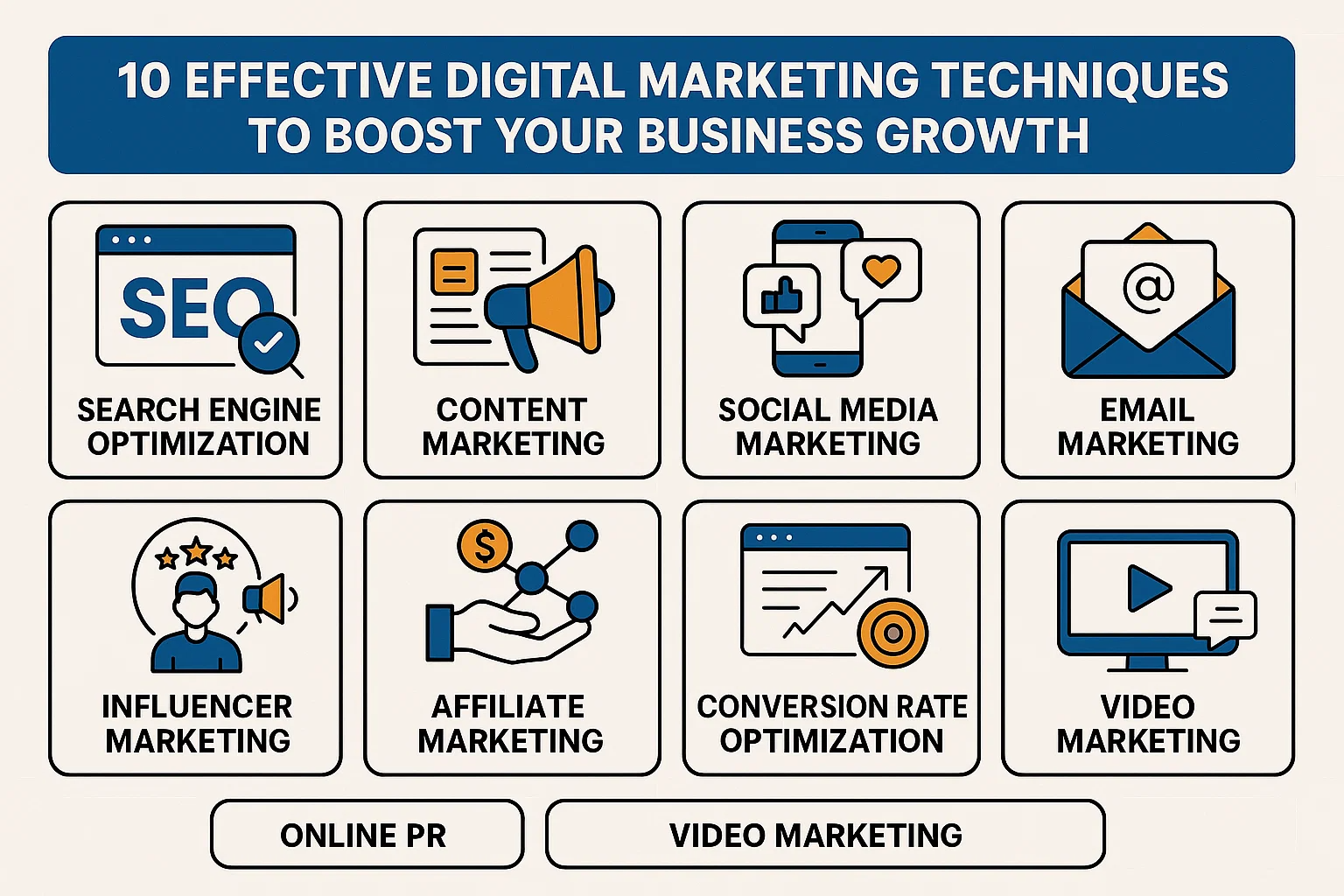
Digital marketing offers a wide range of strategies to help businesses of all sizes reach new customers, increase sales, and establish a strong online presence. In this comprehensive guide, we will explore 10 effective digital marketing techniques to boost your business growth, including practical examples, tips, and step-by-step strategies.
1. Search Engine Optimization (SEO)
SEO is the process of optimizing your website and content to rank higher in search engine results pages (SERPs). A strong SEO strategy ensures your business is visible to people actively searching for products or services like yours.
Key elements of SEO:
-
Keyword Research: Identify high-volume, low-competition keywords related to your business.
-
On-Page SEO: Optimize titles, meta descriptions, headers, and images for search engines.
-
Off-Page SEO: Build backlinks from authoritative websites to increase domain authority.
-
Technical SEO: Ensure website speed, mobile-friendliness, proper indexing, and XML sitemaps.
Benefits of SEO:
-
Long-term organic traffic
-
Higher credibility and trust
-
Better user experience
Tip: Use tools like Google Keyword Planner, Ahrefs, or SEMrush to research and track your SEO performance.
2. Content Marketing
Content marketing involves creating valuable, relevant, and consistent content to attract and retain a clearly defined audience.
Types of content include:
-
Blog posts
-
Infographics
-
Videos and webinars
-
Podcasts
-
Ebooks and whitepapers
Why content marketing works:
-
Builds authority in your industry
-
Encourages engagement and shares
-
Supports SEO by targeting keywords
-
Helps nurture leads
Example: A business offering digital courses can publish a blog on “Top 10 Online Marketing Strategies” to attract aspiring marketers.
3. Social Media Marketing (SMM)
Social media platforms like Facebook, Instagram, LinkedIn, and Twitter allow businesses to connect with their audience on a personal level.
Best practices for SMM:
-
Consistent posting schedule
-
Use visual content like videos and graphics
-
Engage with followers through comments, polls, and messages
-
Run paid campaigns for targeted reach
Benefits of Social Media Marketing:
-
Builds brand awareness
-
Drives traffic to your website
-
Increases lead generation
-
Supports customer retention
Pro Tip: Tailor content for each platform to maximize engagement.
4. Email Marketing
Despite the rise of social media, email marketing remains one of the most effective digital marketing techniques.
Email marketing strategies include:
-
Welcome emails for new subscribers
-
Personalized offers and discounts
-
Drip campaigns for nurturing leads
-
Abandoned cart reminders for e-commerce
Benefits of email marketing:
-
Direct communication with prospects and customers
-
Cost-effective with high ROI
-
Helps retain customers and encourage repeat purchases
Example: A SaaS company can send weekly tips and tutorials to keep users engaged and reduce churn.
5. Pay-Per-Click Advertising (PPC)
PPC advertising allows businesses to pay for visibility on search engines and social media platforms. You only pay when someone clicks your ad.
Common PPC platforms:
-
Google Ads
-
Bing Ads
-
Facebook Ads
-
Instagram Ads
-
LinkedIn Ads
Benefits:
-
Immediate traffic and visibility
-
Targeted advertising based on demographics, interests, or location
-
Measurable results and ROI
Tip: Continuously A/B test your ads to improve CTR and conversion rates.
6. Influencer Marketing
Influencer marketing leverages the reach and credibility of influencers to promote your brand to a wider audience.
Types of influencers:
-
Mega-influencers (millions of followers)
-
Macro-influencers (100k–1M followers)
-
Micro-influencers (10k–100k followers)
-
Nano-influencers (1k–10k followers)
Why it works:
-
Builds trust and credibility
-
Drives engagement and conversions
-
Helps target niche markets
Example: A fitness brand collaborating with health influencers to promote supplements and workout gear.
7. Video Marketing
Videos are highly engaging and effective for storytelling, brand awareness, and product demonstrations.
Types of videos:
-
Explainer videos
-
Tutorials and demos
-
Live streams
-
Customer testimonials
-
Animated videos
Benefits of video marketing:
-
Increases conversions
-
Improves SEO (Google favors video content)
-
Higher engagement on social media
Pro Tip: Keep videos short, informative, and mobile-friendly.
8. Affiliate Marketing
Affiliate marketing allows businesses to partner with individuals or companies who promote their products in exchange for a commission.
Key steps for affiliate marketing:
-
Identify suitable affiliates in your niche
-
Provide them with marketing materials
-
Track sales and commissions
-
Maintain a transparent relationship
Benefits:
-
Performance-based marketing with low risk
-
Expands reach and drives sales
-
Builds partnerships with relevant influencers
9. Marketing Automation
Marketing automation uses software to automate repetitive tasks, saving time and improving efficiency.
Automation tools:
-
Email campaigns (Mailchimp, HubSpot)
-
Social media scheduling (Hootsuite, Buffer)
-
CRM automation (Salesforce, Zoho)
Benefits:
-
Saves time on repetitive tasks
-
Personalizes customer interactions
-
Increases efficiency and ROI
10. Analytics and Conversion Optimization
Tracking performance and optimizing conversions is critical for business growth.
Key steps:
-
Use Google Analytics to track website traffic
-
Monitor key metrics like CTR, bounce rate, and conversion rate
-
Conduct A/B testing on landing pages
-
Use heatmaps to analyze user behavior
Benefits:
-
Data-driven decision-making
-
Maximizes ROI for campaigns
-
Helps identify weaknesses and opportunities
Summary Table: 10 Digital Marketing Techniques
| Technique | Purpose | Key Benefits | Tools/Platforms |
|---|---|---|---|
| SEO | Increase organic search visibility | Traffic, credibility, long-term ROI | Google Keyword Planner, Ahrefs |
| Content Marketing | Build authority and engagement | Leads, SEO, trust | WordPress, Canva, HubSpot |
| Social Media Marketing | Audience engagement | Awareness, leads | Facebook, Instagram, LinkedIn |
| Email Marketing | Direct communication | Customer retention, ROI | Mailchimp, ActiveCampaign |
| PPC | Paid traffic | Immediate visibility, conversions | Google Ads, Facebook Ads |
| Influencer Marketing | Leverage trust | Brand awareness, engagement | Instagram, YouTube |
| Video Marketing | Storytelling | Engagement, conversions | YouTube, TikTok, Vimeo |
| Affiliate Marketing | Performance-based promotion | Sales, reach | ShareASale, Amazon Associates |
| Marketing Automation | Automate tasks | Efficiency, personalization | HubSpot, Salesforce |
| Analytics & Conversion | Measure and optimize | Data-driven decisions, ROI | Google Analytics, Hotjar |
FAQs – 10 Digital Marketing Techniques to Boost Business Growth
Q1. What is the best digital marketing technique for small businesses?
A1. SEO, social media marketing, and email marketing are highly effective for small businesses due to low cost and high reach.
Q2. How long does it take to see results from digital marketing?
A2. Techniques like PPC and social media ads provide immediate results, while SEO and content marketing may take 3–6 months.
Q3. Can I do digital marketing without a big budget?
A3. Yes, SEO, content marketing, social media, and email campaigns can be cost-effective strategies.
Q4. Which tools are essential for digital marketing?
A4. Google Analytics, Mailchimp, SEMrush, Canva, Hootsuite, and HubSpot are commonly used tools.
Q5. How do I measure the success of a digital marketing campaign?
A5. Track metrics such as CTR, conversions, ROI, traffic, engagement, and customer acquisition costs.
Q6. Is influencer marketing effective for all industries?
A6. Influencer marketing works best in niches where audiences trust recommendations, such as fashion, fitness, and tech.
Conclusion
Digital marketing is not just an optional strategy anymore—it’s a necessity for business growth. By implementing these 10 effective digital marketing techniques, businesses can increase their reach, generate leads, improve conversions, and ultimately boost revenue.
From SEO and content marketing to automation and analytics, combining multiple strategies ensures a well-rounded approach to online marketing. Whether you’re a startup, SMB, or large enterprise, these techniques can be tailored to meet your business goals.
With consistent effort, continuous monitoring, and strategic planning, these digital marketing techniques can drive sustainable growth and help businesses achieve long-term success.
