


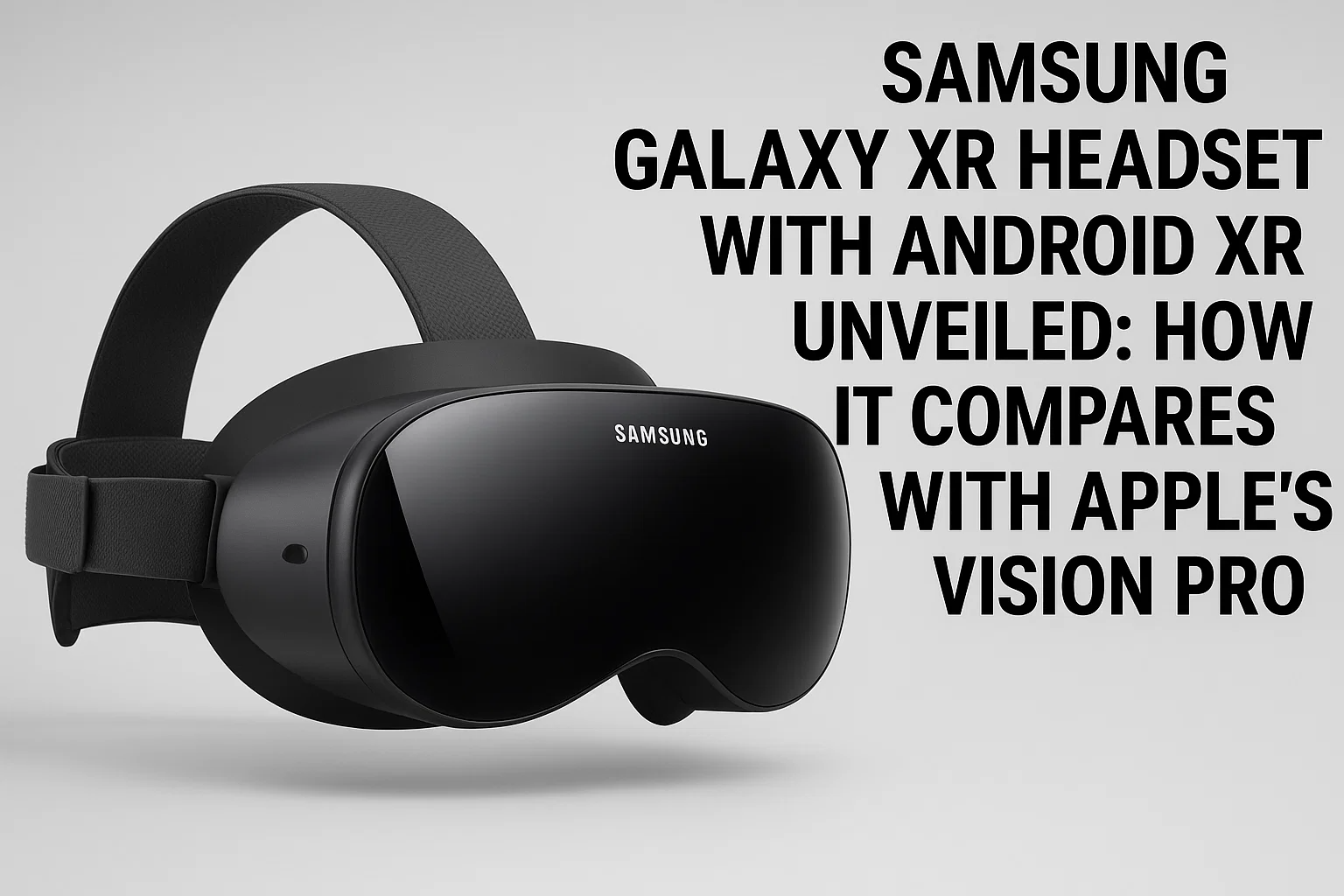
The world of mixed reality (XR) has just taken another leap forward. Samsung — long known for its smartphones, foldables and smart-devices — has officially introduced its first dedicated extended-reality headset, the Samsung Galaxy XR Headset. Built in partnership with Google and Qualcomm Technologies, Inc., and powered by the new operating system Android XR, this headset aims to challenge the very highest tier of AR/VR devices — including Apple’s Vision Pro.
In this deep-dive article we’ll walk through:
-
What exactly the Samsung Galaxy XR headset is and its key specs
-
The new Android XR platform: what it means and how it differs
-
How the Galaxy XR compares with Apple Vision Pro (and other rivals)
-
Use-cases: gaming, productivity, entertainment & beyond
-
Strengths, weaknesses and things to watch
-
A helpful table summarising key differences
-
5-6 frequently asked questions (FAQs) to clarify common queries
Let’s begin.
What is the Samsung Galaxy XR Headset?
Samsung’s new headset marks its entry into the XR hardware space. According to Samsung:
“Built on an open, scalable platform with multimodal AI at its core, Galaxy XR marks the beginning of the Android XR ecosystem.”
That ecosystem emphasises immersive experiences, seamless transitions between real and virtual worlds, and integration of voice, eye and hand tracking.
Some key take-aways on the device:
-
It runs Android XR, the first major headset OS built by Google (with Samsung and Qualcomm) for XR devices.
-
It features powerful hardware – e.g., the Qualcomm Snapdragon XR2+ Gen 2 chipset.
-
The display uses 4K micro-OLED panels (high resolution per eye) and other advanced components.
-
It supports multi-modal interaction: voice, eye-tracking, hand gestures.
-
Samsung emphasises comfort, lightweight build and real-world usability (not just for niche VR).
In short, with the focus keyword Samsung Galaxy XR Headset, this is the product to watch if you’re interested in where immersive computing is heading.
The Android XR Platform: What It Means
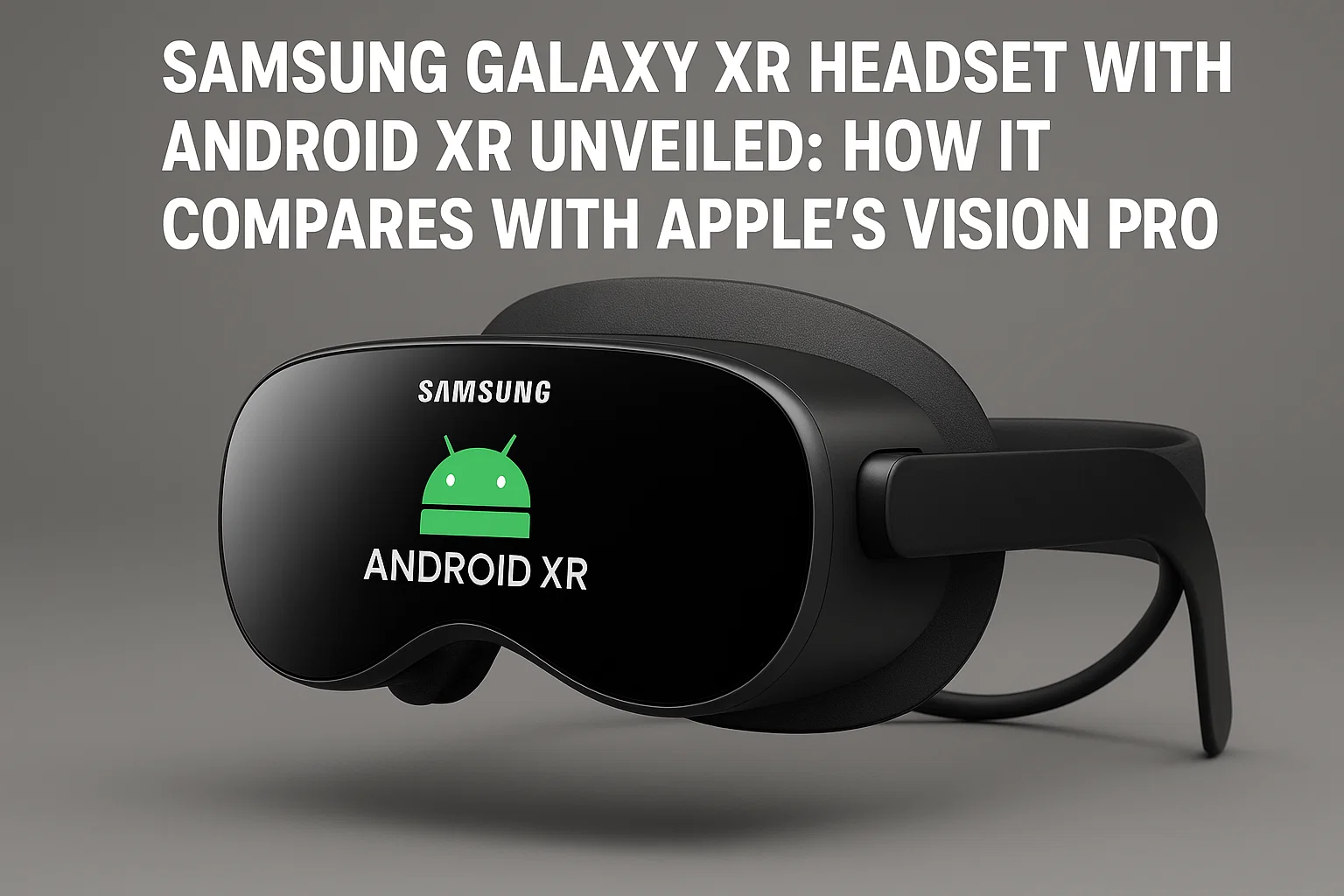
The launch of the Galaxy XR is also the launch of Android XR as a platform. Android XR is more than just a modified Android version — it is an OS designed specifically for extended reality. Some highlights:
-
Android XR brings together virtual reality (VR), augmented reality (AR) and mixed reality (MR) under one umbrella.
-
It integrates Google’s Gemini AI engine built into the system, meaning intelligent assistant features, spatial awareness and voice/gesture interaction are baked-in.
-
Android XR supports the large app ecosystem of Android — meaning many familiar apps should run on XR devices like the Galaxy XR.
-
It’s designed to be scalable across multiple form-factors (headsets, glasses, future devices) rather than being a closed system.
For the user, that means that the Samsung Galaxy XR Headset isn’t a standalone novelty — it is an early flagship of a broader ecosystem.
Comparing Samsung Galaxy XR vs Apple Vision Pro
Let’s turn to how Samsung’s new headset stacks up against one of the most premium XR devices on the market: Apple Vision Pro.
Key areas of comparison
We’ll compare on several dimensions: price, platform, hardware specs, ecosystem, use-cases.
Price:
-
The Galaxy XR is reported to launch at around USD $1,799 in the U.S. and South Korea.
-
In contrast, Apple Vision Pro launched at a significantly higher price point (USD $3,499 or more) — meaning the Galaxy XR offers a more “affordable” entry into premium XR.
Platform & ecosystem:
-
Galaxy XR uses Android XR (open, scalable, Android-based).
-
Vision Pro uses Apple’s visionOS (closed ecosystem, Apple devices integration).
Samsung/Google emphasise the open-platform advantage of Android XR.
Hardware & features:
-
Galaxy XR: 4K micro-OLED, advanced tracking (head, hand, eye), AI assistant Gemini built-in.
-
Vision Pro: Known for very high-end hardware, premium materials, strong integration with Apple ecosystem.
While Samsung has high specs, Apple’s materials & ecosystem cohesion remain strong points.
Ecosystem & apps:
-
Samsung & Google: Many Android apps should be compatible with Galaxy XR, and the Android XR platform aims to support developers through OpenXR, Unity, etc.
-
Apple: Vision Pro has its own app store and deep integration with Apple devices — strong if you are already in Apple’s world.
Use-cases:
-
Samsung emphasises “discovery, play and work” with Galaxy XR — from immersive entertainment to productivity and multitasking.
-
Apple Vision Pro has been positioned for both high-end professional use and premium immersive experiences.
Summary Table
Here’s a table summarising key attributes of Samsung Galaxy XR vs Apple Vision Pro:
| Feature | Samsung Galaxy XR Headset | Apple Vision Pro |
|---|---|---|
| Price (launch) | ~$1,799 USD (approx) | ~$3,499 USD (or similar) |
| Operating System | Android XR | visionOS |
| Ecosystem | Open Android-based, many apps ready, scalable hardware ecosystem | Closed Apple ecosystem, strong device integration |
| Hardware Highlights | 4K micro-OLED displays, hand/eye/voice tracking, detachable battery | Premium build, high resolution, deep Apple integration |
| Developer Support | Built for OpenXR, Unity, Android natively | Apple’s own SDKs, limited to Apple ecosystem |
| Target Use-Cases | Mixed reality for entertainment, work and play | Premium mixed reality, productivity, professional use |
| Comfort / Weight | Lightweight design emphasised (e.g., 545g reported) | Heavier build in some assessments |
| Market Position | Competitive, more affordable high-end XR | Premium tier, niche but high-quality |
This comparison shows that the Samsung Galaxy XR Headset positions itself as a serious competitor — offering many high-end features at a lower price point, while Apple Vision Pro remains a premium luxury device with deep ecosystem ties.
Use-Cases & Scenarios for Samsung Galaxy XR Headset
The Samsung Galaxy XR Headset isn’t just about hardware — it’s about experiences. Here are some compelling scenarios:
1. Immersive Entertainment & Gaming
With 4K micro-OLED displays and hand/eye tracking, the Galaxy XR provides a premium immersive environment. Whether you’re watching a movie on a massive virtual screen or playing a VR game using hand gestures, the experience is rich. The Android XR ecosystem also means familiar mobile games may be adapted for XR.
2. Productivity & Multitasking
Samsung emphasises productivity: you can arrange multiple apps around you, such as email, spreadsheets, video calls — all inside your headset. With Android XR bringing existing Android apps into an immersive workspace, this transforms how you might work remotely or collaborate.
3. Mixed Reality & Real-World Integration
Because Galaxy XR supports pass-through and real-world integration (via multiple cameras, sensors) and voice/gesture/eye control, you can blend virtual content with your physical surroundings. For example, you could overlay a virtual model onto a real-world desk, or get real-time AI assistance via Gemini about what you’re seeing.
4. Future Ecosystem & Expansion
Samsung and Google’s partnership indicates that the Galaxy XR is just the beginning. As Android XR devices proliferate (possibly smart glasses, other XR form‐factors), the value of choosing this ecosystem early grows.
Strengths & Weaknesses of Samsung Galaxy XR Headset
Let’s highlight what the headset does extremely well — and also where there may be trade-offs.
Strengths:
-
Competitive pricing for flagship XR experience (~$1,799) compared with ultra-premium rivals.
-
Open ecosystem (Android XR) making compatibility and developer support stronger.
-
Strong hardware: 4K micro-OLED, AI assistant Gemini integration, hand/eye tracking, gesture/voice interface.
-
Broader use-case beyond just VR: productivity, MR, entertainment.
-
Ergonomic design emphasized for comfort.
Potential Weaknesses / Considerations:
-
Ecosystem maturity: While Android XR is promising, it is fresh; the number of dedicated XR apps may initially lag Apple’s or VR-native platforms.
-
Premium devices like Apple Vision Pro still have brand premium, build quality and ecosystem lock-in advantages.
-
Battery life: As with many XR headsets, session times may be limited compared to mobile phones; Galaxy XR is quoted at up to ~2.5 hours for video playback.
-
Accessory cost & availability: Controllers, straps, travel cases may add extra cost. For example, aftermarket controllers for Galaxy XR reported around $250 extra.
-
Comfort over long sessions: While Samsung emphasises light weight (545g) and ergonomic design, XR sessions longer than an hour might still need breaks.
In-Depth Specs & Features of Samsung Galaxy XR Headset
Here’s a deeper dive into the technical specs and features (based on available info):
-
Displays: 4K micro‐OLED per eye; ultra-high pixel density; wide field of view.
-
Tracking: Eye-tracking cameras, hand/gesture tracking, head tracking, multiple world-facing cameras.
-
Audio: Spatial audio with dual speakers positioned near the ears to give immersive soundstage.
-
Battery: Detachable external battery pack; up to ~2.5 hours video playback.
-
Controls: Side touchpad, volume button, top button, quick panel; long-tap to recenter; double-tap for VR/passthrough toggle.
-
Fit & design: Lightweight (~545g), ergonomic fit with forehead cushion, rear fit dial, soft-touch fabric, detachable light shield for immersion.
-
Platform: Android XR with Gemini AI built-in, supports Android apps out-of-the-box.
-
Connectivity: Compatible with select Galaxy phones, PCs and TVs; PC Link, Call Continuity and Smart View features.
-
Ecosystem: Launch bundle includes “Explorer Pack” (in some markets) with subscriptions like YouTube Premium, Google Play Pass, NBA League Pass etc.
What the Launch Means for the XR Market
The arrival of the Samsung Galaxy XR Headset marks a significant shift:
-
It signals that XR is no longer niche — mainstream mobile brands are investing seriously.
-
With the Android XR platform, Google + Samsung aim to build an “open” alternative to closed XR ecosystems — potentially accelerating development and adoption.
-
At a more accessible price point than some ultra-premium competitors, Samsung may help bring XR into more households.
-
The competition between Samsung/Google, Apple, Meta and others will likely push further innovation (lighter devices, longer battery, more apps).
-
Developers now have incentive to build XR-ready Android apps, meaning more content, sooner. For example, Android XR-labelled apps for the Galaxy XR are already appearing.
In summary: If you’ve been waiting for the “next big thing” in immersive computing — the Galaxy XR may well be it.
Purchase Considerations & Tips
If you’re interested in buying the Samsung Galaxy XR Headset, here are some practical tips:
-
Budget for accessories: The base headset price (~$1,799) may increase when you add controllers, travel case, accessories.
-
Check ecosystem compatibility: If you’re already invested in Android phones/Google services, the Galaxy XR is a strong fit. If you’re deep into Apple devices, evaluate whether visionOS/Apple’s ecosystem is more comfortable.
-
Comfort & fit: Try to demo the headset if possible. Long-session comfort (weight, heat, fit) still matters in XR.
-
Use-case clarity: Are you buying mainly for gaming? Productivity? Mixed reality? The Galaxy XR supports all, but your priority will shape which accessories / apps you’ll use.
-
App availability: While Android XR aims for broad support, early-adopter headsets may have fewer dedicated XR apps at launch. Watch for availability of content you want.
-
Battery & portability: If you plan mobile use (on the go), note battery life (~2–2.5 hours) and external battery pack. For stationary use, ensure suitable setup.
-
Future readiness: With Android XR designed to scale, accessories, updates and next-gen devices may improve the value of your investment over time.
FAQs — Samsung Galaxy XR Headset
Here are frequently asked questions (and answers) about Samsung’s new headset:
Q1. What is the launch price of the Samsung Galaxy XR Headset?
A1. The Galaxy XR is reported to launch in the U.S. and South Korea at around US$1,799 for the base headset.
Q2. Which operating system does the Galaxy XR use?
A2. The device uses Android XR, a platform developed by Google in collaboration with Samsung and Qualcomm specifically for extended reality devices.
Q3. How does the Galaxy XR differ from Apple Vision Pro?
A3. Key differences include: price (Galaxy XR is more affordable), ecosystem (Android XR open vs Apple’s closed visionOS), hardware design and compatibility with existing Android apps. We’ve covered a full comparison above.
Q4. What can the Galaxy XR be used for?
A4. Use-cases include immersive entertainment & gaming, productivity/multitasking (infinite virtual screens), mixed-reality overlays, work/collaboration, and future XR apps.
Q5. How long does the battery last on the Galaxy XR?
A5. Samsung quotes up to 2.5 hours of video playback with the external battery pack attached. Longer use sessions may require breaks or external charging.
Q6. Is the Samsung Galaxy XR compatible with existing Android apps?
A6. Yes — because it runs Android XR, many existing Android apps can run (or be adapted) for the headset. Google and Samsung emphasise broad app compatibility.
Final Thoughts
The Samsung Galaxy XR Headset is a bold step into the next era of immersive computing. It combines cutting-edge hardware, an open XR platform (Android XR), and a competitive price point — making it one of the most compelling XR headsets to date. While it faces strong competition (notably from Apple Vision Pro), Samsung’s strategy of openness, Android compatibility and broad usage scenarios gives it a strong chance to redefine what XR means for consumers and professionals alike.
If you’re in the market for a high-end mixed reality device, the Galaxy XR should absolutely be on your radar. As the ecosystem grows, so does the value of being at the forefront. Whether you’re using it for gaming, work, entertainment or immersive experiences, this headset is promising a new frontier in how we compute, connect and create.
