


In today’s hyper-connected world, businesses are not only competing for attention but for meaningful engagement. Whether you are an aspiring marketer, small business owner, or simply curious about online promotion, understanding digital marketing for beginners is essential. This guide will take you through everything you need to know to start your journey into the digital marketing ecosystem.
Digital marketing is not just about posting on social media or running ads; it is a structured approach to reach your target audience, grow your brand, and drive conversions. From SEO to email campaigns, and from content marketing to analytics, this beginner’s guide covers the full spectrum of online marketing strategies.
1. What is Digital Marketing?
Digital marketing refers to promoting products or services through online channels such as search engines, social media platforms, email, and websites. Unlike traditional marketing, digital marketing allows businesses to track, measure, and optimize campaigns in real time.
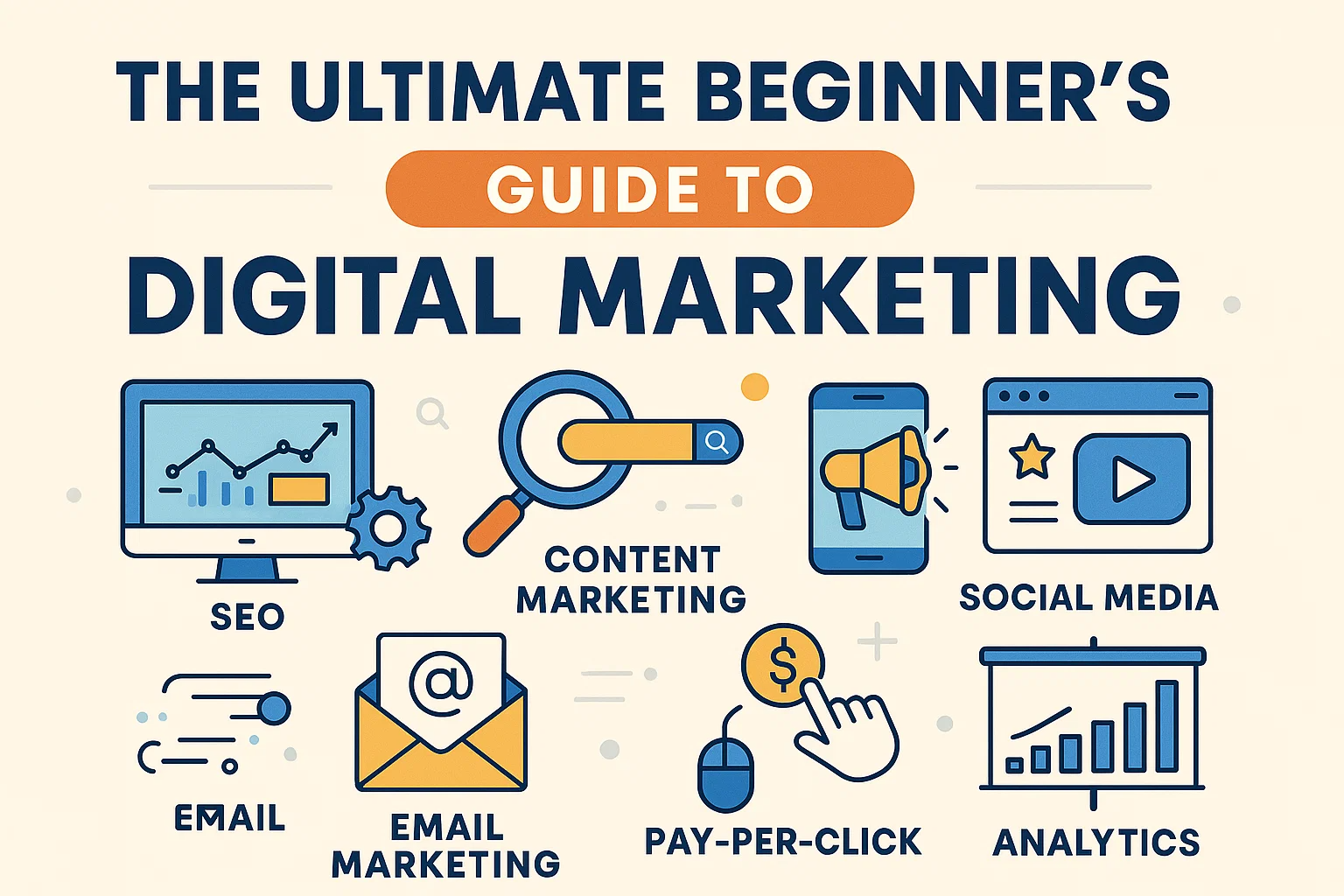
Key components include:
-
Search Engine Optimization (SEO): Optimizing your website to rank higher in Google and other search engines.
-
Content Marketing: Creating valuable content to attract and engage your audience.
-
Social Media Marketing (SMM): Using platforms like Facebook, Instagram, LinkedIn, and Twitter to build your brand and interact with your audience.
-
Email Marketing: Sending newsletters or campaigns to nurture leads and convert them into customers.
-
Pay-Per-Click (PPC) Advertising: Paid online advertising to generate traffic quickly.
-
Analytics & Conversion Optimization: Measuring the effectiveness of campaigns and improving results.
Digital marketing allows even small businesses to compete with large brands because it levels the playing field by offering affordable, measurable, and targeted marketing opportunities.
2. Why Digital Marketing is Important for Beginners
Understanding digital marketing is critical for anyone looking to build a career or business online. Here’s why:
-
Massive Reach: Millions of users are online daily, and digital marketing helps you reach your audience anywhere in the world.
-
Cost-Effective: Compared to traditional marketing, digital campaigns can be run with lower budgets and greater targeting.
-
Trackable Results: Tools like Google Analytics allow you to measure ROI, optimize campaigns, and make data-driven decisions.
-
Flexibility: Campaigns can be adjusted instantly based on performance.
-
Career Opportunities: Digital marketing offers numerous career paths such as SEO specialist, content marketer, PPC expert, or social media manager.

3. Key Components of Digital Marketing
Digital marketing is not one-size-fits-all. Let’s break down the essential components in detail:
3.1 Search Engine Optimization (SEO)
SEO is the practice of optimizing your website to rank higher in search engine results. The goal is to attract organic traffic without paying for ads.
Key SEO strategies:
-
Keyword research
-
On-page SEO (meta tags, headings, content optimization)
-
Technical SEO (site speed, mobile-friendliness, structured data)
-
Off-page SEO (backlinks, social signals)
-
Local SEO (Google My Business, maps optimization)
SEO Benefits:
-
Long-term traffic growth
-
Higher credibility with users
-
Cost-effective compared to paid ads
3.2 Content Marketing
Content marketing is creating valuable, relevant, and consistent content to attract and retain an audience.
Content types include:
-
Blogs
-
Infographics
-
Videos
-
Podcasts
-
Case studies
-
Social media posts
Tips for beginners:
-
Focus on solving user problems
-
Maintain consistency
-
Optimize content for SEO
-
Repurpose content across platforms
Benefits:
-
Builds authority and trust
-
Drives organic traffic
-
Supports other digital marketing strategies
3.3 Social Media Marketing (SMM)
Social media marketing involves promoting your business on social platforms like Facebook, Instagram, LinkedIn, Twitter, and Pinterest.
SMM Strategies:
-
Define your target audience
-
Choose the right platform
-
Create engaging content
-
Monitor analytics and engagement
-
Run paid campaigns for quick reach
Benefits:
-
Increases brand visibility
-
Improves customer engagement
-
Generates leads and sales
3.4 Email Marketing
Email marketing remains one of the highest ROI marketing strategies. It allows businesses to communicate directly with subscribers and nurture leads.
Steps to succeed in email marketing:
-
Build a targeted email list
-
Personalize your emails
-
Create attention-grabbing subject lines
-
Include strong call-to-actions (CTA)
-
Analyze campaign performance
Benefits:
-
Direct communication with audience
-
Builds relationships
-
Cost-effective and measurable
3.5 Pay-Per-Click Advertising (PPC)
PPC involves running paid campaigns on platforms like Google Ads, Facebook Ads, and LinkedIn Ads.
Tips for beginners:
-
Start with a small budget
-
Target specific audience demographics
-
Use A/B testing for ad performance
-
Monitor conversions and optimize campaigns
Benefits:
-
Quick traffic generation
-
Precise targeting options
-
Measurable ROI
3.6 Analytics & Conversion Optimization
Digital marketing is incomplete without analytics. Tools like Google Analytics help track user behavior, traffic sources, and conversion rates.
Key metrics to track:
-
Traffic sources
-
Bounce rate
-
CTR (Click Through Rate)
-
Conversion rate
-
ROI
Optimizing campaigns based on data ensures better results and higher ROI.
4.Table for Beginners
| Step | Action | Tips & Tools |
|---|---|---|
| 1 | Learn the basics | Read blogs, take beginner courses (HubSpot, Google Digital Garage) |
| 2 | Understand SEO | Tools: Ahrefs, SEMrush, Ubersuggest |
| 3 | Master content marketing | Use Canva, Grammarly, Lumen5 |
| 4 | Explore social media | Tools: Buffer, Hootsuite, Meta Business Suite |
| 5 | Practice email marketing | Tools: Mailchimp, ConvertKit |
| 6 | Run small PPC campaigns | Google Ads, Facebook Ads |
| 7 | Track results & optimize | Google Analytics, Hotjar, SEMrush |
| 8 | Build portfolio | Showcase campaigns and results on LinkedIn or personal website |
| 9 | Keep learning | Follow industry blogs, webinars, and podcasts |
| 10 | Implement consistently | Create a routine and track progress |
5. Common Mistakes for Beginners
-
Ignoring analytics and relying on guesswork
-
Overloading content with keywords (keyword stuffing)
-
Running campaigns without a clear strategy
-
Neglecting mobile optimization
-
Failing to engage with the audience
6. FAQs – Digital Marketing for Beginners
Q1. What is the best way to start learning digital marketing?
A1. Begin with online courses, tutorials, and blogs. Focus on one component at a time like SEO, social media, or content marketing.
Q2. How long does it take to learn digital marketing?
A2. With consistent learning and practice, basic skills can be acquired in 3–6 months. Advanced expertise may take 1–2 years.
Q3. Do I need technical knowledge for digital marketing?
A3. Basic technical skills like website navigation, Excel, and Google Analytics are helpful but not mandatory.
Q4. Can I do digital marketing for free?
A4. Yes. You can start with free tools, blogs, and organic strategies. Paid campaigns can come later.
Q5. Is social media marketing enough to succeed online?
A5. No. Social media is one component. A combination of SEO, content, email, and PPC ensures comprehensive results.
Q6. What are some free tools for beginners?
A6. Google Analytics, Canva, Mailchimp, Buffer (limited version), Ubersuggest, HubSpot CRM, Google Trends.
7. Conclusion
Digital marketing for beginners may seem overwhelming at first, but it is highly rewarding once you understand the fundamentals. The key is to learn step by step, practice consistently, and measure your results.
From SEO to content marketing, social media campaigns, email marketing, and PPC advertising, every component plays a crucial role in building an effective digital presence. With dedication and the right tools, beginners can quickly grow into proficient digital marketers capable of driving results for businesses of any size.
Digital marketing is an ever-evolving field, and staying updated with trends, algorithms, and tools ensures long-term success. Start small, experiment, and keep learning—the online world offers endless opportunities for those ready to embrace it.
