


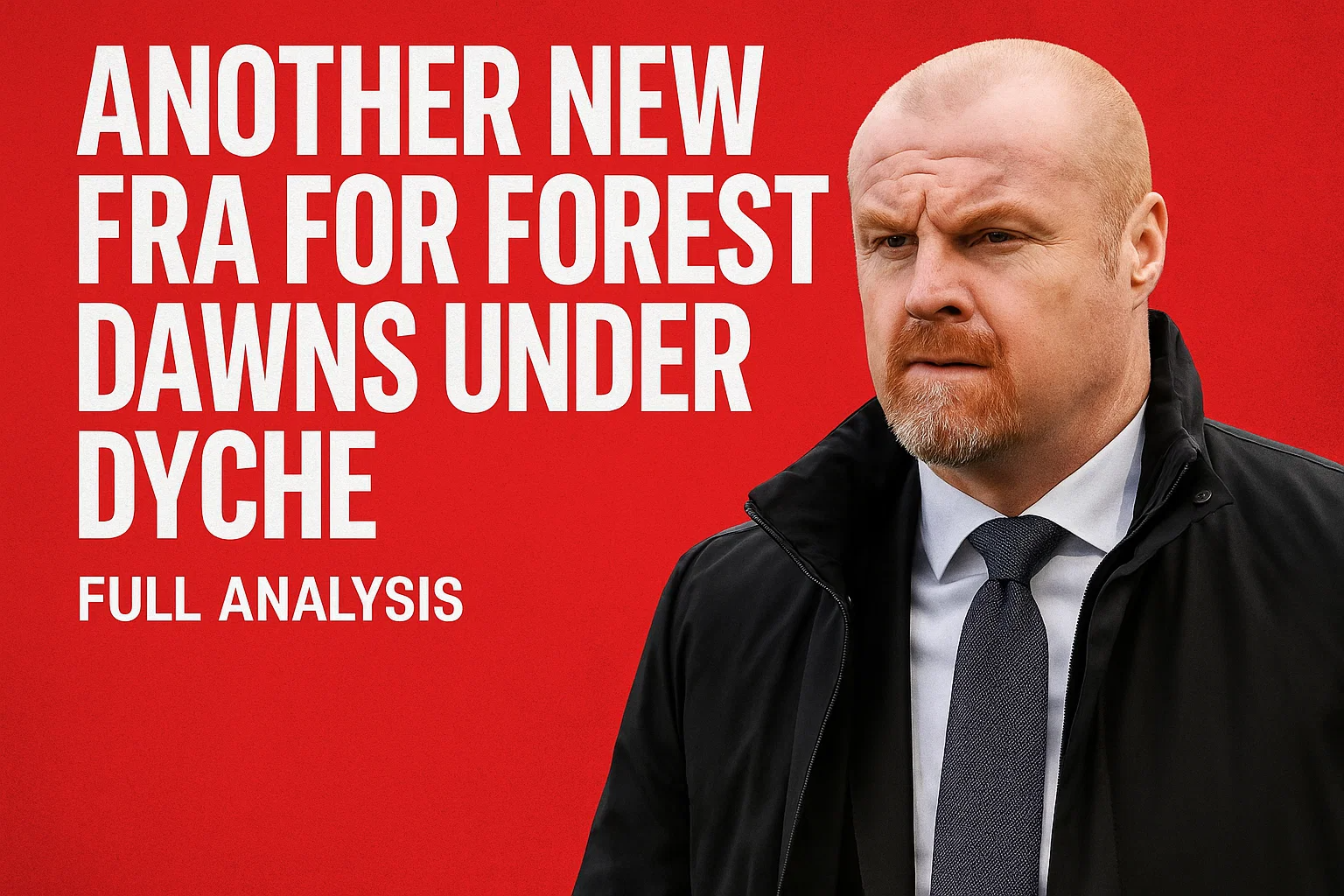
When Nottingham Forest fans belted out Mull of Kintyre, their new manager, Sean Dyche, looked around the City Ground and soaked it all in. The atmosphere was electric, a mix of nostalgia and hope for a new chapter in the club’s storied history.
Paul McCartney’s song has been Forest’s anthem since 1978, marking the club’s First Division triumph under Brian Clough. For Dyche, returning to Forest wasn’t just another managerial role; it was a homecoming almost 35 years after leaving as a young professional to join Chesterfield. The Europa League night against Porto gave him the perfect stage.
“I’d waited a long time for that moment. As a young person here in ’87 all I wanted to do was wear the shirt. To come back as the manager is super pleasing,” Dyche said. “So many big moments in life are so nerve-wracking they just go and suddenly they are finished. I thought ‘take it in and put it in the memory.’”
1. Dyche’s Tactical Setup Against Porto
Dyche’s Forest side looked different from previous seasons. Without the injured Chris Wood, his main striker and goal threat, Dyche adapted a tactical setup that maximized his squad’s strengths.
-
Back Four: Murillo and Nikola Milenkovic formed a solid centre-back pairing, supported by Elliot Anderson and Douglas Luiz in midfield.
-
Midfield Freedom: Gibbs-White was given more liberty to attack, flanked by wingers Callum Hudson-Odoi and Dan Ndoye.
-
Striker Adjustment: Igor Jesus replaced Taiwo Awoniyi, dropping deeper to unsettle Porto’s defense before scoring his third Europa League goal from the penalty spot.
Dyche also recalled James McAtee and Arnaud Kalimuendo to the bench, leaving out some summer signings like Omari Hutchinson (£37.5m record signing) and Dilane Bakwa, who was injured.

Table 1: Key Tactical Adjustments
| Position | Player | Role |
|---|---|---|
| Centre-backs | Murillo & Nikola Milenkovic | Defensive stability |
| Defensive Midfield | Douglas Luiz & Elliot Anderson | Shield back four, control tempo |
| Attacking Midfield | Morgan Gibbs-White | Creative freedom |
| Wingers | Callum Hudson-Odoi & Dan Ndoye | Stretch defense, supply crosses |
| Striker | Igor Jesus | Drop deep, link play, penalty taker |
2. Forest’s High-Tempo Approach vs Postecoglou’s Style
Under former manager Ange Postecoglou, Forest attempted a high press, high-tempo style. Dyche’s approach is more pragmatic: compact, fight-driven, and counter-attacking.
-
Morale Boost: The team showed courage and spirit missing in previous matches.
-
Defensive Solidity: First clean sheet in 21 matches, dating back to a 1-0 win over Manchester United in April.
-
Player Confidence: Gibbs-White commented on the newfound positive morale and clarity under Dyche.
“It feels a lot more positive and it needs to stay like that. The manager has instilled that in us,” Gibbs-White told TNT Sports.
3. Fans Quickly Embrace the New Era
Forest supporters had grown impatient under Postecoglou, chanting “sacked in the morning” in previous European matches. Dyche’s appointment was a welcome relief:
-
Connection with History: Dyche referenced Brian Clough’s dog Del Boy from almost 40 years ago, striking a nostalgic chord with fans.
-
Backroom Familiarity: Coaches Ian Woan and Steve Stone, former Forest players, bridged the generational gap.
-
Stadium Atmosphere: Fireworks and chants of “Forest are back” created an early bond between the manager and supporters.
“Winning helps, but the fans are fair. If they see a team out there wearing the shirt with pride, they’ll accept you,” Dyche said.
4. Key Players’ Performance
Morgan Gibbs-White: Energetic, allowed creative freedom, pivotal in midfield.
Douglas Luiz: Controlled defensive midfield, offering cover for centre-backs.
Igor Jesus: Dropped deep to disrupt Porto’s defense, scored decisive penalty.
Callum Hudson-Odoi & Dan Ndoye: Provided width and pace, although end product was sometimes inconsistent.
Table 2: Match Performance Ratings
| Player | Rating (out of 10) | Contribution |
|---|---|---|
| Igor Jesus | 8 | Goal + linking play |
| Morgan Gibbs-White | 8.5 | Creativity & energy |
| Douglas Luiz | 7.5 | Midfield control |
| Callum Hudson-Odoi | 7 | Winger runs & support |
| Dan Ndoye | 7 | Width & defensive tracking |
| Murillo & Milenkovic | 8 | Defensive stability |
5. Dyche’s First Impressions
Dyche emphasized patience and mental strength:
-
Focused on absorbing big moments.
-
Encouraged players to play with pride and discipline.
-
Built trust with supporters through pre-game messaging and connection to club history.
6. Statistical Insights
-
Clean Sheet: First since April, ending a 21-match run without one.
-
Win in European Competition: First under Dyche, setting tone for the season.
-
Positional Adjustments: Back four vs Porto brought balance compared to Postecoglou’s high press.
-
Goals Distribution: Penalty success from Gibbs-White and Igor Jesus.
7. Challenges Ahead
-
Injuries (Chris Wood, Bakwa) may limit attacking options.
-
Integrating summer signings will take time.
-
Maintaining team morale over long Premier League and European campaigns.
-
Adapting to a pragmatic style while keeping fans engaged.
8. Fans’ Perspective
-
Fans appreciate pragmatism and fight.
-
Quick acceptance due to Dyche’s club connections and respect for history.
-
Positive atmosphere seen in chants, fireworks, and stadium energy.
9. Dyche vs Postecoglou: Tactical Comparison
| Aspect | Postecoglou | Dyche |
|---|---|---|
| Style | High press, high tempo | Pragmatic, compact |
| Morale | Fluctuating | Confidence & pride |
| Defensive stability | Weak | Strong, clean sheet achieved |
| Fan connection | Distant | Historic references, early bond |
| Squad use | Rotation heavy | Core team focused, bench integration gradual |
10. Implications for the Season
-
Stronger defensive identity, boosting confidence in Premier League.
-
Early European win could positively affect morale and squad cohesion.
-
Fans have reconnected with club identity, vital for long-term engagement.
-
Dyche’s approach may bring long-term stability compared to frequent managerial changes.
11. FAQs
Q1. Who is Sean Dyche and what’s his history with Forest?
A1. Dyche is Forest’s new manager, returning 35 years after leaving as a young professional. He previously managed Burnley.
Q2. How did Nottingham Forest perform in Dyche’s first match?
A2. Forest won against Porto, achieving their first clean sheet in 21 matches.
Q3. Which players stood out in the Porto game?
A3. Morgan Gibbs-White, Igor Jesus, and Douglas Luiz were key performers.
Q4. How does Dyche’s style differ from Postecoglou?
A4. Dyche uses a pragmatic, compact approach compared to Postecoglou’s high press, high-tempo system.
Q5. Are fans happy with the new manager?
A5. Yes, fans showed support and rekindled connection with club history, embracing Dyche’s approach.
Q6. What challenges lie ahead for Forest this season?
A6. Injuries, integrating summer signings, and maintaining morale in league and Europe are key challenges.
12. Conclusion
Sean Dyche’s arrival marks a new era for Nottingham Forest. The blend of pragmatism, fight, historical connection, and tactical awareness has already shown promising results. Fans, players, and staff are optimistic as the team enters this new chapter, signaling a positive trajectory for both domestic and European campaigns.
Dyche’s focus on identity, pride, and performance could stabilize Forest after a turbulent managerial season and lay the foundation for a competitive, spirited side that fans can rally behind for years to come.
